
You’ve received four quotes for commercial signage, and the pricing structures look completely different. One printer promises express delivery, another emphasizes regulatory expertise, a third offers the lowest per-square-foot rate. Without a clear framework for comparison, choosing becomes guesswork that can lead to costly mistakes: municipal fines, project delays, or signage that fails within months of installation.
Selecting a digital printing company in Calgary requires more than comparing unit prices. The right partner understands Calgary municipal sign bylaws, manages permit applications, delivers consistent quality across materials, and provides transparent pricing that reveals the true project cost. These capabilities prevent hidden expenses that can exceed initial savings from choosing the cheapest quote.
This article outlines five concrete criteria for evaluating printing companies, with specific questions to ask during consultations and red flags that signal potential problems before you commit to a contract.
- What technical capabilities should a digital printing company offer?
- How do you verify compliance with Calgary municipal regulations?
- Transparent pricing: what should a complete quote include?
- Portfolio and proven track record: the evidence that matters
- Full-service approach: from design conception to final installation
What technical capabilities should a digital printing company offer?
A printing company’s equipment and technical expertise directly determine which projects they can handle reliably. Mismatched technology leads to either inflated costs or compromised quality, particularly when volume requirements don’t align with the production method.
Digital printing excels for small to medium runs requiring customization or variable data. The technology allows economical production of single units or dozens of pieces without the setup costs associated with traditional methods. Screen printing becomes cost-effective for larger volumes of identical graphics, typically beyond fifty units, where setup expenses distribute across the quantity.
For commercial signage in Calgary’s climate, material selection impacts durability significantly. Outdoor applications demand substrates that withstand temperature extremes, UV exposure, and moisture. Vinyl with UV lamination resists fading and cracking better than unprotected materials. Rigid substrates like aluminum composite panels provide dimensional stability for permanent installations. Mesh banners allow wind passage, reducing stress on mounting points during Alberta’s strong winds.

Large-format printing capabilities determine whether a company can produce standard commercial signage without seaming multiple panels. Construction site boards typically measure 4 feet by 8 feet, requiring equipment that handles these dimensions as single pieces. Seamed signs show visible joints that compromise professional appearance and create weak points for weather infiltration.
Essential finishing capabilities include precision cutting for custom shapes, reinforced grommets for banner installations, and edge sealing that prevents delamination. Companies offering these services in-house maintain better quality control than those outsourcing finishing work to third parties. When evaluating providers, ask to visit their production facility to verify equipment capabilities firsthand rather than relying solely on marketing claims.
| Project type | Quantity | Recommended technology | Key advantage |
|---|---|---|---|
| Construction site board | 1-10 units | Digital printing | No setup costs, custom sizing |
| Event banners (identical) | 50+ units | Screen printing | Lower unit cost at volume |
| Vehicle graphics | 1-5 vehicles | Digital printing (vinyl) | Precise color matching, complex graphics |
| Temporary yard signs | 20-100 units | Digital or screen (depends on design complexity) | Evaluate based on color count and customization needs |
Materials for Calgary’s climate: Laminated vinyl withstands freeze-thaw cycles better than unprotected prints. Aluminum composite panels resist warping in temperature fluctuations. Mesh materials rated for wind loads prevent damage during storms. Verify that quoted materials match your installation environment and expected lifespan.
How do you verify compliance with Calgary municipal regulations?
Municipal violations create financial penalties and operational delays that often exceed the total cost of proper compliance from the start. A printing company claiming regulatory expertise must demonstrate specific knowledge of Calgary bylaws, not generic awareness that regulations exist.
According to the City of Calgary, temporary signs exceeding certain size thresholds require permits. The Land Use Bylaw specifies that temporary signs with an area greater than 1.5 square metres must be located on an approved temporary sign marker. Commercial permanent signage typically requires a development permit before installation.

Fines for violations range between $75 and $1,000 under Calgary’s sign bylaws. A bylaw amendment that took effect January 1, 2024, allows the City to double or triple fines for repeat offenders, targeting companies that systematically ignore regulations.
Certain locations prohibit signage entirely without special authorization. The Parks and Pathways Bylaw restricts signs in green spaces. Installing signs on road right-of-way requires specific permits beyond standard sign approvals. A qualified printing company knows these restrictions and includes location verification in their consultation process.
Compliance risk: Non-compliant signage discovered during municipal inspections must be removed immediately, regardless of installation costs already incurred. Projects delayed by permit issues miss marketing windows for events or development launches. Verify that your printing company handles permit applications as part of their service, not as an afterthought when installation problems arise.
During initial consultations, ask these qualifying questions to assess regulatory knowledge:
-
How many sign permits do you obtain monthly in Calgary?
Frequent permit applications indicate established relationships with the Planning Department and familiarity with current processing procedures.
-
Describe a recent permit application that was initially rejected and how you resolved it.
Problem-solving experience reveals depth of regulatory knowledge beyond routine approvals.
-
Who assumes liability if installed signage violates bylaws?
Clear contractual responsibility protects you from costs associated with non-compliant work.
-
Are permit costs included in your quote, or billed separately?
Transparent fee structures prevent surprise expenses during project execution.
Companies demonstrating specific Calgary knowledge reference actual bylaw sections, discuss relationships with City departments, and provide realistic timelines that account for permit processing. Vague responses about « handling all necessary paperwork » signal insufficient expertise.
Transparent pricing: what should a complete quote include?
Quote structures vary significantly across printing companies, making direct price comparison difficult without understanding which costs each quote includes or excludes. Missing line items that appear later as additional charges eliminate any initial price advantage.
A comprehensive quote separates design services, production costs, finishing work, permit fees, delivery charges, installation labor, and applicable taxes into distinct line items. This itemization allows you to compare equivalent services across multiple bids and identify where cost differences originate.
Design fees depend on whether you provide print-ready files or require graphic creation. Companies offering design services should specify revision rounds included in the base price and charges for additional changes after approval. Production costs encompass materials, printing, and basic finishing like cutting to size. Premium finishes including lamination, custom die-cutting, or specialized mounting add separate charges.
Permit fees vary by sign type and location. Companies experienced with Calgary regulations provide accurate permit cost estimates based on your specific project. Delivery charges should specify service areas included in base pricing and additional fees for installations beyond that zone. Installation costs differ dramatically between simple banner hanging and complex structural mounting requiring lifts or specialized equipment.
| Quote element | Complete quote | Incomplete quote (red flag) |
|---|---|---|
| Design work | Itemized with revision count specified | « Design included » with no scope definition |
| Production | Materials and printing separated | Single « production » line without material specifications |
| Installation | Labor, equipment, site prep itemized | Absent, or « installation extra » without pricing |
| Permits | Estimated fees or confirmed costs | Not mentioned (client responsibility implied) |
| Modifications | Policy stated with fee structure | No modification terms (disputes likely) |
Understanding a breakdown of a printer’s quote helps identify which pricing model suits your project. Per-square-foot pricing works well for straightforward signage with standard materials. Fixed project pricing provides budget certainty for complex jobs involving design, multiple materials, and installation coordination.
Payment terms protect both parties when structured around project milestones. Typical arrangements include a deposit at contract signing, progress payment before production begins, and final payment upon installation completion. This structure gives you leverage to ensure quality standards before releasing full payment.
Red flags in pricing: Quotes lacking installation costs often double in price when that work gets added. « Variable fees depending on site conditions » without defined parameters create unlimited pricing flexibility favoring the vendor. Absence of written warranties means no recourse for premature material failure. Prices significantly below market average typically indicate substandard materials or inexperienced installers cutting corners.
Request clarification on cancellation policies, particularly regarding deposits and work completed before cancellation. Understand whether quoted prices remain valid for a specific period or fluctuate with material costs. These contract terms prevent disputes when project timelines shift or scope changes during execution.
Portfolio and proven track record: the evidence that matters
Marketing materials showcase ideal outcomes, while a detailed portfolio reveals actual capability across diverse conditions and requirements. Evaluating past work requires looking beyond attractive photos to understand technical execution and problem-solving.
Request portfolio examples matching your project type, scale, and installation environment. Construction site signage differs substantially from retail storefront graphics in durability requirements, mounting methods, and regulatory considerations. A company demonstrating experience with your specific application better anticipates challenges and appropriate solutions.
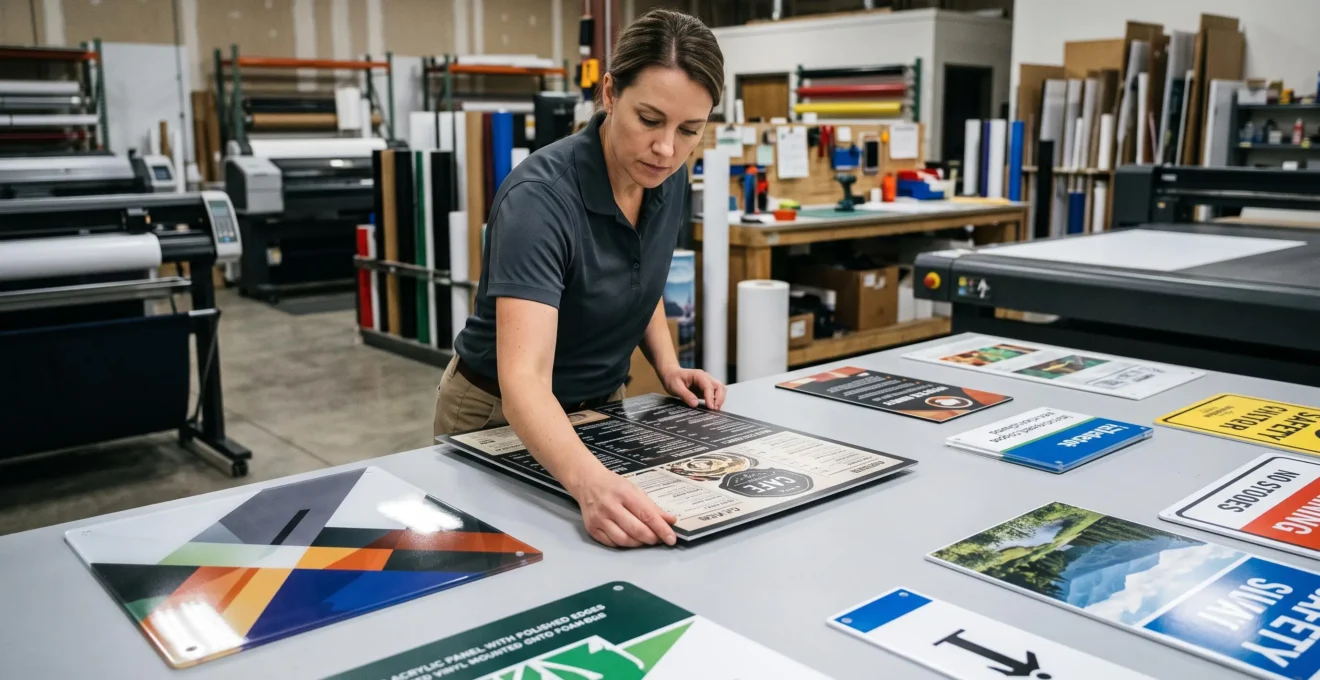
Examine portfolio images for finishing quality. Clean edges, consistent color across large areas, proper alignment of multi-panel installations, and professional mounting all indicate attention to detail. Ask about the materials used in portfolio examples and why those materials were selected for each application. This reveals whether material recommendations stem from technical knowledge or inventory availability.
Verifiable client references provide independent quality assessment beyond company-controlled marketing. Request contact information for clients in your industry or with similar project types. During reference calls, ask specific questions about timeline accuracy, problem resolution, quality relative to promises, and any unexpected costs or delays.
-
Show recent projects from the past twelve months in my industry.
Recent work reflects current capabilities and staff, while industry-specific projects demonstrate relevant experience.
-
What materials were used and why were they chosen?
Material selection rationale reveals technical knowledge versus generic recommendations.
-
How did actual timelines compare to initial estimates?
Consistent delivery performance indicates reliable project management systems.
-
Describe how you handled an unexpected problem during installation.
Problem-solving examples show adaptability and commitment to project completion.
Years of Calgary-specific operation matter more than general industry experience. Local tenure demonstrates knowledge of regional suppliers, seasonal considerations affecting installation, municipal department procedures, and building types common in Calgary’s commercial districts. Companies operating locally for several years have navigated Calgary’s specific business environment successfully.
Professional certifications from material manufacturers validate technical training. Programs like 3M Preferred Installer status require demonstrated proficiency with specific products and installation methods. While certifications don’t guarantee quality, they indicate investment in skill development beyond learning through trial and error on client projects.
Online reviews through the Better Business Bureau or Google provide additional perspective on customer service and problem resolution. Look beyond average ratings to identify recurring themes in feedback. Multiple mentions of deadline reliability, responsive communication, or installation professionalism indicate consistent strengths. Conversely, repeated complaints about specific issues reveal systemic weaknesses. Review how the company responds to criticism, whether they acknowledge problems and describe corrective actions or deflect responsibility.
Full-service approach: from design conception to final installation
Coordinating separate vendors for design, printing, permitting, and installation creates multiple handoff points where miscommunication causes errors. Each specialist optimizes their portion of the workflow without accountability for overall project success, leaving you to resolve conflicts when their work doesn’t integrate seamlessly.
A full-service printing company maintains responsibility for the entire project outcome. When design files don’t match production capabilities, the same team resolves the issue internally rather than assigning blame between vendors. When permit applications require design modifications, integrated teams adjust efficiently without renegotiating contracts across multiple parties.
Complete service encompasses initial consultation to understand requirements, graphic design conforming to production constraints and regulatory requirements, permit application management, material procurement, production, quality control, delivery logistics, professional installation, and post-installation support. This breadth of service eliminates coordination time you would otherwise spend managing vendor interfaces.
Single-point responsibility particularly benefits projects with tight deadlines or complex regulatory requirements. Understanding the importance of the prepress stage demonstrates how integrated workflows catch errors before production begins, preventing costly remakes or installation delays.
Time savings from consolidated service prove substantial for marketing directors managing multiple projects simultaneously. Rather than separate consultations with designers, printers, permit consultants, and installers, you work with one contact who coordinates all elements. Status updates come from a single source with complete project visibility instead of tracking multiple vendors at different completion stages.
Quality consistency improves when one team controls the complete workflow. Color management from design through production ensures printed output matches approved proofs. Installation crews familiar with how the shop produces signage handle materials appropriately, preventing damage during mounting. This continuity reduces defects requiring warranty service or remakes.
- Single point of contact simplifies communication and accountability
- Integrated workflow reduces errors from handoffs between vendors
- Coordinated timeline management across all project phases
- One warranty covering design through installation
- Efficiency gains from teams familiar with each other’s processes
- Potentially lower costs if coordinating vendors yourself
- Ability to select specialists excelling in specific areas
- Flexibility to change vendors between project phases if needed
- Requires time investment managing multiple relationships and contracts
- Responsibility falls on you to resolve conflicts between vendors
The value proposition of full-service providers extends beyond convenience to risk reduction. When problems occur, you deal with one company contractually obligated to deliver the complete outcome rather than mediating disputes between independent vendors protecting their individual interests. This unified accountability justifies premium pricing for projects where timeline certainty and quality assurance outweigh minimum possible cost.
- Technical capabilities: Verify equipment handles your project scale, materials suit Calgary’s climate, and finishing options meet durability requirements. Match printing technology (digital versus screen) to your volume and customization needs.
- Calgary regulatory compliance: Confirm specific knowledge of municipal sign bylaws, including permit thresholds, restricted locations, and fine structures. Ask how many permits they process monthly and who handles applications.
- Transparent pricing: Demand itemized quotes separating design, production, finishing, permits, delivery, and installation. Identify hidden costs and understand payment terms tied to project milestones.
- Proven track record: Review portfolios showing projects similar to yours from the past year. Contact verifiable references and examine Better Business Bureau ratings for recurring service patterns.
- Full-service capability: Evaluate whether integrated service from design through installation justifies premium pricing through reduced coordination time, unified accountability, and lower error risk.
Selecting a printing company based solely on initial price quotes overlooks factors that determine total project cost and outcome quality. Technical capabilities, regulatory expertise, pricing transparency, documented experience, and service integration each prevent specific risks that cause projects to exceed budgets or fail to meet expectations. Asking targeted qualification questions during vendor evaluation transforms subjective impressions into objective capability assessments, enabling confident decisions that support long-term business relationships rather than one-off transactions requiring renewed vendor searches for each project.