
The profitability of your flyers in Quebec doesn’t depend on design, but on the strategic optimization of local distribution constraints to ensure your offer lands on your ideal client’s fridge.
- Postal code micro-targeting and choosing the right fold are more decisive than paper weight.
- A physical coupon, in the context of Quebec’s inflation, becomes a powerful retention tool.
Recommendation: Audit your production chain, from the print file to the distribution schedule, to eliminate hidden costs and maximize the impact of every dollar invested.
Hesitating to launch a flyer campaign? We understand. Between the idea that “paper is dead” and the complexity of distribution channels like Publisac or Canada Post, the investment can seem risky for a Quebec SME. Many pizzeria owners, renovation contractors, or local shopkeepers have already spent fortunes on printing for disappointing results, leading them to believe this marketing channel is obsolete.
The common reflex is to focus on an eye-catching design or an aggressive promotion. However, these elements are only the tip of the iceberg. The success of a physical direct marketing campaign isn’t played out on aesthetics, but on a series of logistical and psychological decisions made beforehand. What if the real key wasn’t the beauty of your flyer, but its ability to survive the journey from the mailbox to the refrigerator magnet?
This article is not another list of generic tips. It is an operational guide for Quebec SMEs. We will deconstruct the profitability mechanisms of a flyer campaign, focusing on optimizing the specific constraints of our local distributors. You will discover how to transform every technical choice – from the type of fold to the paper weight – into a competitive advantage to generate qualified leads in your neighborhood.
To navigate effectively through these strategies, here are the key points we will address. Each section is designed to provide you with concrete tools to build a campaign that is not only visible but, above all, profitable.
Summary: Optimizing Every Step of Your Flyer Campaign in Quebec
- Why targeted neighborhood distribution is more profitable than mass mailing?
- Roll fold or accordion: which one reveals your promotional offer at the right time?
- How does a physical coupon increase the retention rate of the flyer on the fridge?
- The mistake of printing 10,000 flyers with a promo that ends next week
- When to reduce paper weight to meet distributor constraints?
- How to structure your advertising print to trigger a call within 10 seconds?
- Digital or offset printing: which one to choose for a run of 500 to 10,000 copies?
- How to get quality prints in less than 24 hours without paying triple the price?
Why targeted neighborhood distribution is more profitable than mass mailing?
The idea of covering an entire city with your flyers is attractive, but it’s the shortest path to a negative return on investment. For a local SME, profitability doesn’t come from volume, but from precision. Mass mailing wastes 80% of your budget on households that will never be your customers. Modern direct marketing, particularly in Canada, allows for surgical precision that completely changes the game. Postal micro-targeting is your best ally.
Forget large zones. Think at the level of the letter carrier’s route. Using tools like Canada Post’s Precision Targeter, you can select specific distribution routes. According to Canada Post, postal code targeting allows for remarkable precision with an average of 20 addresses, allowing you to only reach neighborhoods that precisely match your ideal clientele (for example, single-family homes for a renovation service, or high-density apartments for a pizzeria).
This approach allows for crossing geographical data with demographic information provided by Canada Post or the Institut de la statistique du Québec. You can thus concentrate your efforts on the highest potential areas, drastically reducing waste and mechanically increasing the conversion rate. A flyer delivered to the right person has infinitely more value than a hundred distributed at random.
By concentrating your budget on fewer doors, but the right ones, you can invest more in the quality of your message and your offer, which maximizes the impact of every flyer delivered.
Roll fold or accordion: which one reveals your promotional offer at the right time?
The choice of your flyer’s folding is not a simple aesthetic decision. It is a strategic decision that directly influences how your message will be received, especially in the competitive ecosystem of Publisac or a bundle of mail. The fold determines the sequence of your information’s discovery. A bad fold can bury your offer, while a good fold creates a controlled reading path.
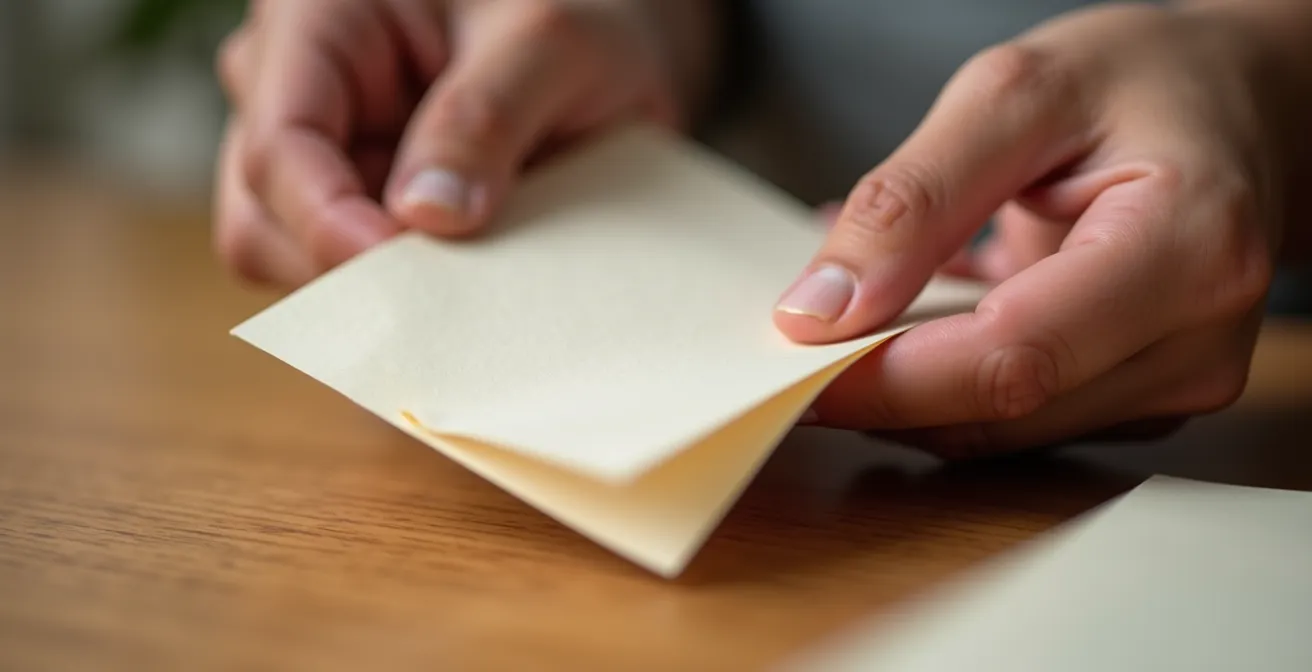
The roll fold, for example, works like a story that unfolds page by page. It is ideal for protecting a message or a coupon inside a grouped mailing like Publisac. The reader must handle the flyer to discover the final offer, which increases engagement. Conversely, the accordion fold (or Z-fold) opens in a single gesture to reveal your entire message. It is perfect for a solo mailing via Canada Post, where the immediate visual effect can create a strong impact and facilitate information comparison.
The following table summarizes the psychological impact and recommended use for each type of fold, key information drawn from direct mail best practices.
| Fold Type | Main Advantage | Recommended Channel | Psychological Impact |
|---|---|---|---|
| Roll Fold | Message protection in dense mailings | Publisac (multiple inserts) | Progressive reveal creating suspense |
| Accordion Fold | ‘Wow’ visual effect upon opening | Canada Post (solo mailing) | Immediate overview for comparison |
So think about your flyer’s journey: should it stand out in a pile or shine alone? The answer will dictate the fold that transforms a simple piece of paper into an engaging experience.
How does a physical coupon increase the retention rate of the flyer on the fridge?
In a digital world, the detachable coupon may seem archaic. Yet, it is the secret weapon to ensure your flyer survives beyond the few seconds following its removal from the mailbox. The ultimate goal is not just to be read, but to earn a place on the refrigerator. The coupon transforms your advertisement from a simple “message to read” into a “valuable object to keep.”
Psychologically, a coupon materializes future savings. It becomes a pending task, a tangible reminder of your offer. This perceived value is so strong that, according to compiled data, nearly 88% of Canadians visit a website or store after receiving a direct mail item, a figure largely influenced by concrete offers. The coupon is the most direct bridge between paper and commercial action.
This trend is particularly marked in Quebec, where the recent economic context has reinforced the appeal for tangible savings.
Case Study: The Coupon Explosion in Quebec During Inflation
According to the MAPAQ 2024 Food Consumption and Distribution Directory, inflation has propelled discounts and promotions to the rank of second and third purchase influence factors for Quebec consumers, right after taste. Platforms dedicated to deals like SOSCuisine or Glouton have seen their popularity explode, proving that Quebecers are actively looking for savings. A physical coupon on a flyer directly responds to this need, giving your SME immediate relevance and a reason to be kept.
By integrating a clearly defined and easy-to-detach coupon, you are not just offering a discount; you are giving your potential customer a pragmatic reason to keep your brand in their sights for days, if not weeks.
The mistake of printing 10,000 flyers with a promo that ends next week
This is one of the most costly and common mistakes in direct marketing: the gap between your promotion’s lifespan and the real delays in the distribution chain. Printing an urgent offer might seem like a good tactic to create scarcity, but if it expires before half your flyers are even delivered, you’ve thrown your money out the window. Distribution schedule planning is non-negotiable.

Between finalizing your design, printing, preparation for the distributor, and effective distribution, two weeks or more can easily pass. A service like Canada Post Neighborhood Mail, for example, can require 3 to 5 business days just for the delivery phase. If your “weekend special” promotion arrives in mailboxes the following Monday, it is not only useless, but it generates frustration and harms your brand image.
To avoid this trap, you must think backward: start from your desired promotion end date and move back in time. A good rule of thumb is to ensure your offer is valid for at least two weeks *after* the estimated distribution date.
Action Plan: Production Calendar for a Successful Promotion
- D-14: Finalization of design and validation of promotion dates. Aim for a minimum validity of 3 weeks for the offer.
- D-10: Sending files to the printer and firm confirmation of production lead times.
- D-7: Receipt of prints and packaging according to the precise standards of Canada Post or the Publisac distributor.
- D-5: Physical delivery to the Canada Post sorting center. Anticipate 3 to 5 business days for Neighborhood Mail processing.
- D-0: Start of effective distribution. At this stage, your promotion must be valid for at least 2 more weeks.
Time management is as crucial as budget management. A well-planned promotion is a promotion that has the time to work for you.
When to reduce paper weight to meet distributor constraints?
Paper choice is often perceived as a question of quality: thicker paper seems more “premium.” In reality, for a mass distribution campaign, it is above all an economic tradeoff dictated by the logistical constraints of distributors. A weight that is too high can blow up your distribution costs or even make your flyer ineligible for certain services.
Each distribution service has its own weight and dimension rules, which directly impact pricing. Canada Post, for example, segments its Neighborhood Mail rates based on these criteria. Exceeding the standard 50g weight pushes you into the “Oversize” category, resulting in a significant surcharge that, multiplied by thousands of copies, can wipe out your margin.
It is therefore crucial to know these thresholds before even sending your files to the printer. Sometimes, slightly reducing the paper weight (moving from an 80 lb to a 70 lb, for example) will have only a minimal impact on the customer’s perception, but will allow you to stay in the most advantageous price bracket. As indicated in various postal standards guides, every gram counts.
| Service | Maximum Weight | Impact on Rate | Paper Recommendation |
|---|---|---|---|
| Neighborhood Mail Standard | 50g | Base rate | 70-80 lb text |
| Neighborhood Mail Oversize | 500g | Surcharge applicable | 100 lb cover |
| Publisac/Neighborhood Mail | By agreement | Per thousand distributed | 60-70 lb text recommended |
Before choosing the most beautiful paper, ask yourself which paper is the most profitable for your distribution channel. The answer is often found in a subtle balance between perception, weight, and budget.
How to structure your advertising print to trigger a call within 10 seconds?
Your flyer is not a novel; it is a miniature billboard. You only have a few seconds to capture attention and convince. Most people don’t read a flyer; they scan it. Your mission is to design an implacable visual hierarchy that guides the reader’s eye toward the desired action, all in less than 10 seconds.
Forget long paragraphs and endless bullet points. The structure must follow a logic of ultra-fast discovery. An effective model is that of 4 zones, where each element has a precise function within a defined time window. The message must be so clear that a person can understand the value proposition and know how to act at a single glance.
Your Action Plan: Rapid Conversion Flyer Structure
- Zone 1 (0-2 seconds): A giant benefit-headline that occupies 30% of the space. It must scream the solution to a problem. Example: “Your pizza delivered in 30 min or it’s free!” rather than “La Bella Pizzeria.”
- Zone 2 (2-5 seconds): A striking visual that shows the desired end result (a happy family eating pizza, a perfect lawn), without superfluous text.
- Zone 3 (5-7 seconds): The irresistible offer, clearly stated with a time limit to create urgency. Example: “2 for 1 on all large pizzas – This week only!”.
- Zone 4 (7-10 seconds): A multiple and impossible-to-miss Call to Action (CTA). Include a large QR code for mobile users, a prominent local phone number, and a short, memorable website URL.
Integrating a QR code is particularly powerful because it creates a measurable bridge between the physical world and your digital environment.
Case Study: The Power of Direct Mail + Digital Integration
The effectiveness of this approach is proven. According to an analysis by the Institute of Practitioners in Advertising cited by Canada Post, campaigns that combine direct mail and digital channels are 27% more likely to increase sales volume and 40% more likely to increase customer acquisition than single-channel campaigns. The QR code is the perfect tool to precisely measure this return on investment.
By sacrificing superfluous details in favor of a clear message and an obvious path to action, you maximize your chances of turning a hurried reader into a potential customer.
Digital or offset printing: which one to choose for a run of 500 to 10,000 copies?
Choosing the right printing technology is another crucial strategic tradeoff for an SME. The question is not whether digital is “better” than offset, but determining which of these technologies is the most profitable for your specific print volume. Each method has its own advantages in terms of cost, speed, and flexibility.
For small print runs (generally under 2,000 copies), digital printing is king. It does not require expensive printing plates, making it ideal for A/B tests, ultra-targeted campaigns, or quick needs. You can print 500 flyers with offer A and 500 with offer B to see which works best, without breaking the bank. This is flexibility at its best.
Conversely, as soon as you exceed 5,000 copies, offset printing becomes more economically attractive. Although the setup cost is higher (plate creation), the cost per flyer drops drastically as volume increases. Offset also guarantees color quality and perfect consistency over very long runs, in addition to offering a wider range of premium finishes.
For Quebec SMEs, the choice will therefore depend on the campaign strategy, as detailed in this table based on local printing market realities.
| Volume | Recommended Technology | Estimated Unit Cost | Key Advantages |
|---|---|---|---|
| 500-1,000 copies | Digital | $0.50-$0.75/unit | Personalization, fast turnaround, easy A/B testing |
| 2,000-5,000 copies | Hybrid or Offset | $0.25-$0.40/unit | Cost-quality balance, possibility of overprinting |
| 5,000-10,000 copies | Offset | $0.15-$0.25/unit | Minimum unit cost, constant quality, premium finishes |
Digital printing techniques have evolved significantly; you can now design, print, and deliver personalized direct mail items in as little as 48 hours.
– Canada Post, Neighborhood Mail Guide
Don’t pay for digital flexibility if you need offset volume, and vice versa. The right technical choice is the one that maximizes your profit margin.
Key Takeaways
- The profitability of a flyer lies in micro-targeting by postal route, not in mass mailing.
- Logistics (fold, weight, timing) are more important than aesthetics for surviving distribution and optimizing costs.
- A physical coupon is a powerful retention tool that transforms an advertisement into a valuable object, especially in the Quebec economic context.
How to get quality prints in less than 24 hours without paying triple the price?
Urgency is often the enemy of quality and budget. Ordering flyers for the next day can quickly turn into a nightmare: exorbitant prices, printing errors, and ultimately, a disappointing result. However, it is possible to combine speed and quality without blowing up costs. The secret lies not in the choice of printer, but in the immaculate preparation of your print file.
The majority of delays and extra costs in “express” printing come from poorly prepared files. A file in RGB color mode instead of CMYK, low-resolution images, lack of bleeds, or missing fonts force the printer to stop the presses and contact you. Every back-and-forth is lost time and, often, extra money billed for “compliance adjustments.” This advertising market, which carries significant weight, does not forgive lack of preparation. Indeed, according to one analysis, nearly 4.7 billion dollars were spent on advertising in Quebec in 2022, a context where every dollar must be effective.
To ensure smooth and rapid production, your file must be “print-ready” in the strictest sense of the term. This means it 100% respects the printer’s technical specifications. Adopting a rigorous checklist beforehand is the best insurance against bad surprises.
Your Checklist for an Express Print-Ready File
- Color Mode: Is your file in CMYK (Cyan, Magenta, Yellow, Black) and not RGB (Red, Green, Blue)? The color profile (e.g., ISO Coated v2) should be specified.
- Image Resolution: Do all embedded photos and logos have a resolution of 300 DPI (dots per inch) at their final print size?
- Bleeds: Have you added a 0.125 inch (3mm) bleed on all sides of the document to avoid white edges after cutting?
- Text Vectorization: Have all fonts been vectorized (converted to outlines) or embedded in the PDF file? This is the point that avoids 90% of delays.
- Backup Template: Have you prepared a “Plan B”? A simplified version of your design, in a standard format like 4×6 inches and a common paper (e.g., 100lb gloss), ready to be sent in case of absolute emergency.
By providing a perfect file, you don’t just become an easy client; you become a priority partner. Apply this analytical grid now to audit your next campaign and transform your flyers into true engines of local growth.